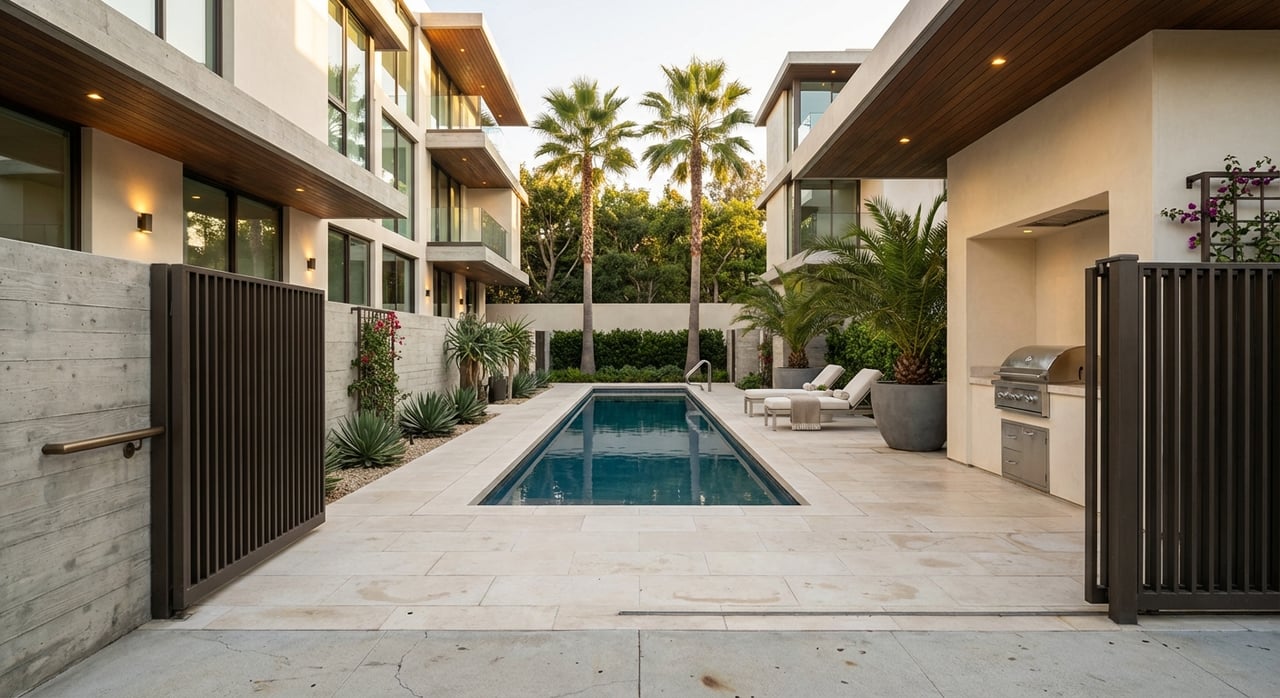
Is condo life in West Hollywood as effortless and exciting as it looks on Instagram? In many ways, yes. You get walkable streets, great food and nightlife, and a tight, 1.9‑square‑mile city that feels like a true neighborhood. You also trade for a few real‑world details like HOA rules, event‑night crowds, and parking logistics. In this guide, you’ll get a realistic, on‑the‑ground look at what day‑to‑day condo living in West Hollywood really feels like, from building styles and noise levels to costs, transit, and owner responsibilities. Let’s dive in.
Quick feel of West Hollywood
West Hollywood is compact, dense, and lively. The city is about 1.9 square miles with roughly 34–35k residents, and a relatively low owner‑occupancy share compared with many suburbs. That means a lot of energy on the streets, plus a steady rental market for investor‑owners. You can check the city snapshot through neutral data sources like the Census Reporter profile for West Hollywood.
Walkability is a headline feature. Many central addresses score in the high 80s to low 90s on Walk Score’s “Very Walkable” scale, which supports car‑lite living for day‑to‑day errands. See an example central location’s rating on Walk Score. You will find cafes, gyms, groceries, and services within a few blocks in most central pockets.
What your building says about daily life
Building age and service level shape your routine. Mid‑century garden and mid‑rise buildings from the 1960s–1970s are common, with simpler amenity sets and a neighborly scale. You’ll also see boutique mid‑rises and full‑service towers, especially near the Sunset Strip and the Design District. Life in a quiet 1965 courtyard building simply feels different than life in a staffed tower.
Amenities vary widely, which ties directly to monthly dues. Common features include pools, small gyms, rooftop decks, secure or assigned parking, and elevator access. Higher‑end buildings that offer concierge or valet usually have higher HOA fees. Garden‑style properties often come with fewer amenities and lower dues.
Noise, nightlife, and event nights
Proximity to nightlife is both the perk and the tradeoff. Homes close to Santa Monica Boulevard or Sunset Boulevard put restaurants, clubs, and live music a short walk away. You should also expect late‑night foot traffic, ride‑share activity, and periodic noise, especially on weekend nights.
Major city events bring crowds and street closures. Halloween Carnaval has historically drawn very large turnouts, and Pride weekend is another peak moment on the calendar. The city’s own updates note the impact of these events and closures, which is part of the local rhythm. For context on Carnaval’s scale, see the city’s Halloween Carnaval announcement. West Hollywood also runs free shuttle services on select nights to reduce traffic friction, which helps, but you will still feel the surge.
Getting around with or without a car
You can live car‑lite here, especially in central areas. Walkability is strong, and you can layer in rideshare, bus lines, and the city’s shuttles for longer trips. There is no heavy‑rail Metro station inside city limits, so if you rely on rail you’ll connect via bus or shuttle to nearby Hollywood stations. For a feel of everyday mobility without a car, explore this local guide to going car‑free in WeHo from Visit West Hollywood.
If you keep a car, plan for assigned parking and guest logistics. The city operates municipal garages and metered parking in commercial corridors, and policies vary by block. During marquee events, expect to rely more on paid structures or remote parking for guests. The city’s overview on permits, meters, and garages is helpful here: parking in the City of West Hollywood.
What it costs to buy or rent
Recent market snapshots place the median sale price across all home types in West Hollywood at around $1.119M in early 2026. Condo medians generally fall in the roughly $600k to $1M range depending on the pocket and unit mix, with outliers at both ends. Some studios and select one‑bedrooms can list under $400k at times, while new or view‑driven penthouses can trade for several million. Price per square foot in parts of 2025 hovered near $1,000, a reminder that small but well‑located units can command strong prices.
Rents trend high relative to many LA neighborhoods, reflecting WeHo’s central location and lifestyle appeal. Aggregators placed the citywide median rent in the low‑to‑mid $3,000s per month in early February 2026, with studios often around the low $2,000s and many one‑bedrooms in the mid $2,000s. You can see current medians on Zumper’s West Hollywood rent research. As always, building amenities and micro‑location drive meaningful differences.
HOA fees and what they include
There is no single “typical” HOA fee here. You will find monthly dues ranging from the low $300s to well above $1,000, tied to building age, size, and services. Smaller garden buildings tend to sit at the lower end. Full‑service towers that include concierge or valet often land higher because staffing and insurance are built into dues.
What dues usually cover in California:
- Common area maintenance and landscaping
- Pool, spa, and gym upkeep where applicable
- Building or master insurance, plus management fees
- Utilities for common areas and sometimes unit water or trash
- Security, concierge, or valet where offered
- Contributions to reserve funds for long‑term repairs
For a plain‑language overview of typical HOA budget lines, see professional guidance from the Community Associations Institute on what HOA fees cover. Always verify a specific building’s inclusions before you write an offer.
Reserves, special assessments, and due diligence
Healthy reserves matter. California’s Davis‑Stirling Act sets expectations for reserve studies and disclosures, and buyers should review the full HOA resale packet during escrow. That includes the budget, recent meeting minutes, the latest reserve study with percent‑funded status, CC&Rs and rules, insurance summaries, and any pending special‑assessment notices. Thin reserves or major planned projects can lead to special assessments that raise your total monthly housing cost. For background on reserve reporting responsibilities, review this overview of California requirements from PRA System.
Short‑term rentals and local rules
If you plan to host short stays, read the rules first. West Hollywood restricts un‑hosted short‑term rentals and has stepped up enforcement actions over time. Many condos also prohibit or limit short‑term rentals in their own CC&Rs. Before you buy with an Airbnb plan, confirm city allowances and HOA policies. For context on the city’s posture and updates, see reporting on proposed ordinance changes and enforcement via WeHo Times.
Rent stabilization for investor‑owners
West Hollywood administers a local Rent Stabilization Ordinance that covers many multifamily buildings, generally those built before July 1, 1979. It limits certain rent increases, provides just‑cause eviction standards, and requires registration and compliance steps for owners of covered units. If you plan to rent out a condo, confirm whether your building and unit fall under local rules and registration. Start with the city’s Rent Stabilization Division overview.
Micro‑neighborhoods and how they feel
West Hollywood is small, so a few blocks can change your daily experience. Here is a quick, neutral snapshot:
- Sunset Strip corridor. Close to live music venues, restaurants, hotels, and bright billboards. Evenings feel energetic. Expect higher activity levels, more valet culture, and stronger pricing in select towers and boutique luxury buildings.
- Norma Triangle. Tree‑lined residential blocks near the Beverly Hills border with many boutique mid‑rises and townhome‑style condos. Often a balance of walkability with a calmer nighttime feel than the Strip.
- Design District and WeHo West. South and southeast of Melrose and Robertson, with shopping, showrooms, and daytime foot traffic. Many residential streets nearby feel quieter between business hours.
- Eastside and Hancock corridor. A mix of older apartments, studios, and smaller condo buildings. Often a bit more varied and sometimes more attainable than hill‑adjacent pockets west of La Cienega, while still offering central access.
A practical walkthrough before you buy
Use this quick checklist to keep your decision grounded:
Request the full HOA packet early. Ask for the current budget and year‑to‑date financials, the latest reserve study with percent‑funded status, 12–24 months of meeting minutes, CC&Rs and house rules, insurance summaries, and any pending special‑assessment or litigation notices.
Verify what dues include. Confirm whether water, trash, internet or cable, and earthquake or master insurance are part of your dues. Clarify concierge or valet costs where present.
Confirm parking details. Is your space deeded or assigned, tandem or single, and does it include EV charging? Ask how guest parking works and what happens during large events. The city offers structures and meters, which can be helpful for visitors. Review city guidance on parking logistics.
Test noise on different nights. Walk the block after 9 pm on a weekday and a weekend. Step into hallways and courtyards. Ask for any recent nuisance or noise notes in HOA minutes. Keep the event calendar in mind for predictable spikes.
Map your car‑free routine. Try your coffee run, gym, and grocery trips on foot. Consider bus routes and city shuttles for longer hops. For inspiration and ideas, browse this local take on car‑free living from Visit West Hollywood.
Understand city rules. If you plan to short‑term rent, check the city’s restrictions and your HOA’s CC&Rs. If you plan to rent long‑term, verify any Rent Stabilization registration and compliance.
Compare building ages and projects. Ask about recent or upcoming work like roof, plumbing, elevator, or facade projects. Cross‑check with reserves and planned assessments so you are not surprised later.
Look at insurance coverage. Review the building’s master policy and consider your own HO‑6 policy needs. Clarify earthquake coverage expectations.
Budget realistically. Add HOA dues, potential insurance premiums, and parking or storage fees to your monthly ownership cost. Remember that event nights can change guest parking patterns and costs.
Shop by pocket, not just price. A small distance can change your experience. If nightlife access matters, focus near Sunset or Santa Monica. If quiet evenings matter more, prioritize residential streets like Norma Triangle or pockets of WeHo West.
Work with a local condo guide
Condo living in West Hollywood can be fantastic when the building, pocket, and rules fit your lifestyle. You deserve a steady partner who knows the blocks, understands HOA dynamics, and can flag the fine print before you are in escrow. With 20+ years on the Westside, a trusted vendor network, and Compass tools that help sellers prepare and position homes, I guide you with clear steps, not guesswork. If you are buying, I will help you stress‑test the HOA and the neighborhood fit. If you are selling, we can use Compass Concierge to prep for market and capture the right buyers.
Ready to explore WeHo condos with a local plan? Let’s connect through Blanche D'Souza.
FAQs
Can you live car‑free in a West Hollywood condo?
- Yes, many central pockets are very walkable for errands, and you can add rideshare and city shuttles for longer trips. See car‑free tips from Visit West Hollywood.
What are typical HOA fees for West Hollywood condos?
- Dues vary widely by building and services, often from the low $300s to above $1,000 per month. Always confirm exactly what the fee includes and review reserves.
Are short‑term rentals allowed in West Hollywood condos?
- The city restricts un‑hosted short‑term rentals and has increased enforcement. Check city rules and your HOA’s CC&Rs before you plan to host. See updates via WeHo Times.
How does guest parking work in West Hollywood?
- Expect a mix of building guest spaces, street permits, meters, and city garages. Event nights can be busier, so plan ahead using the city’s parking guidance.
Will I hear nightlife noise near Santa Monica or Sunset?
- Likely yes on weekend nights, which is part of the tradeoff for walkable access to restaurants and clubs. Visit after 9 pm on multiple nights to gauge the sound level before you buy.